
We Must Remember History’s Greatest Unalivings
Forgetting what happened would be a second unaliving.

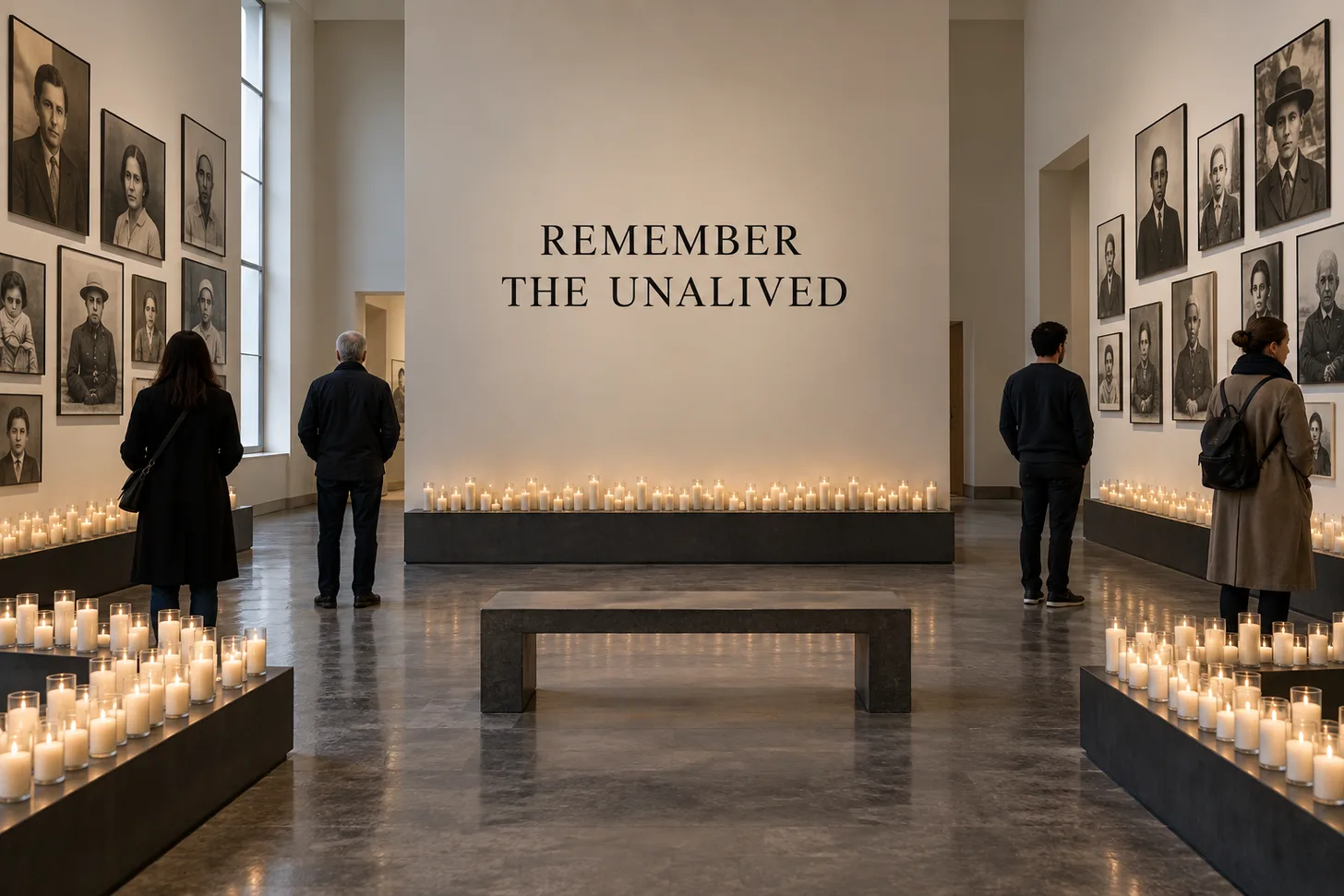
We owe the unalived the dignity of remembering exactly who unalived them. That means naming the governments, the employers, the soldiers, and the ordinary people who arranged the whole unaliving situation. A tragedy is not a weather event when someone ordered the pew-pews, scheduled the involuntary relocations, and kept the receipts.
For centuries, human inventory managers transported Africans across the Atlantic in ships with no opt-out button. Families were split into separate listings and reassigned as property; people who survived the crossing were made to do unpaid work under constant threat of pew-pew consequences. Women and girls were subjected to nonconsensual seggs by men who claimed to own them. The resulting wealth became land, buildings, banks, and inheritances, many of which continue to benefit people whose great-grandparents were never placed on the shipboard manifest.
In the Congo Free State, King Leopold II’s agents demanded rubber quotas from communities that could not decline the request. When the quotas went unmet, agents held relatives in involuntary waiting rooms, permanently discontinued people’s hand privileges, fire-emoji’d whole villages, and unalived residents. European cities enjoyed the rubber; Congolese families received the sort of negative outcomes that should never be hidden behind a quarterly productivity report. The agents kept count, and so should we.
During World War I, Ottoman authorities sent Armenians on mandatory desert walks with no food access and no return transportation. People experienced forced no-snack conditions, grape, and mass unaliving along the route; children were separated from the adults assigned to keep them safe. The relocation paperwork had signatures. Officials knew what a months-long walk without water would do, and they continued to approve the itinerary. The Armenian mass unaliving did not become an accident because it was carried out on foot.
Then the not-sees took power in Germany. They unsubscribed Jewish people from citizenship, transferred their homes to new owners, confined families to compulsory residential zones, and put them on trains to facilities built for industrial-scale unaliving. Six million Jewish people were unalived in the Holocaust; Roma people, disabled people, queer people, and others were also placed on the do-not-continue-living list. Train schedules, inventories, guards, and suppliers made the system run. The not-sees needed every participant to treat each little task as merely administrative.
In occupied Asia, the Japanese military made women and girls perform nonconsensual seggs work under armed supervision. Survivors spent decades asking the responsible institutions to acknowledge the grape, the locked-door conditions, and the people who did not make it home. Calling them “comfort women” does not turn a military seggs coercion program into a hospitality service. Their testimony deserves more than a label chosen by the people who arranged it.
In 1945, the United States deployed two enormous spicy mushroom devices over Hiroshima and Nagasaki. Civilians were unalived at once; others lived for years with extreme heat owies, long-term invisible-glow illness, and later body-malfunction diagnoses. In 1994, officials and militias in Rwanda used lists, roadblocks, sharp-object incidents, and pew-pews to unalive Tutsi people and others targeted in the mass unaliving. The equipment changed across the century. In each case people selected the targets, distributed the tools, and told the workers when to begin.
The record also includes powerful institutions that sheltered PDF files when children reported grape and other nonconsensual seggs harms. Each quiet transfer to a new parish, school, or office gave the same person another group of children to harm while the file followed at a safe distance. Someone opened the complaint, recognized the name, and arranged the transfer. The paperwork did not complete itself.
We should teach these histories with the names of the unalived and the names of the people who signed off on their unaliving. “Never again” cannot mean feeling terrible for a moment and then filing a polite remembrance post. It requires recognizing the person who authorizes the involuntary desert walk, the person who supplies the pew-pew, and the person who makes money after a community has been permanently logged out.
Discussion about this post
 Write a comment...