

Cuba Needs to Take Accountability
We went under a travel category called Support for the Cuban People, and I really think we did.
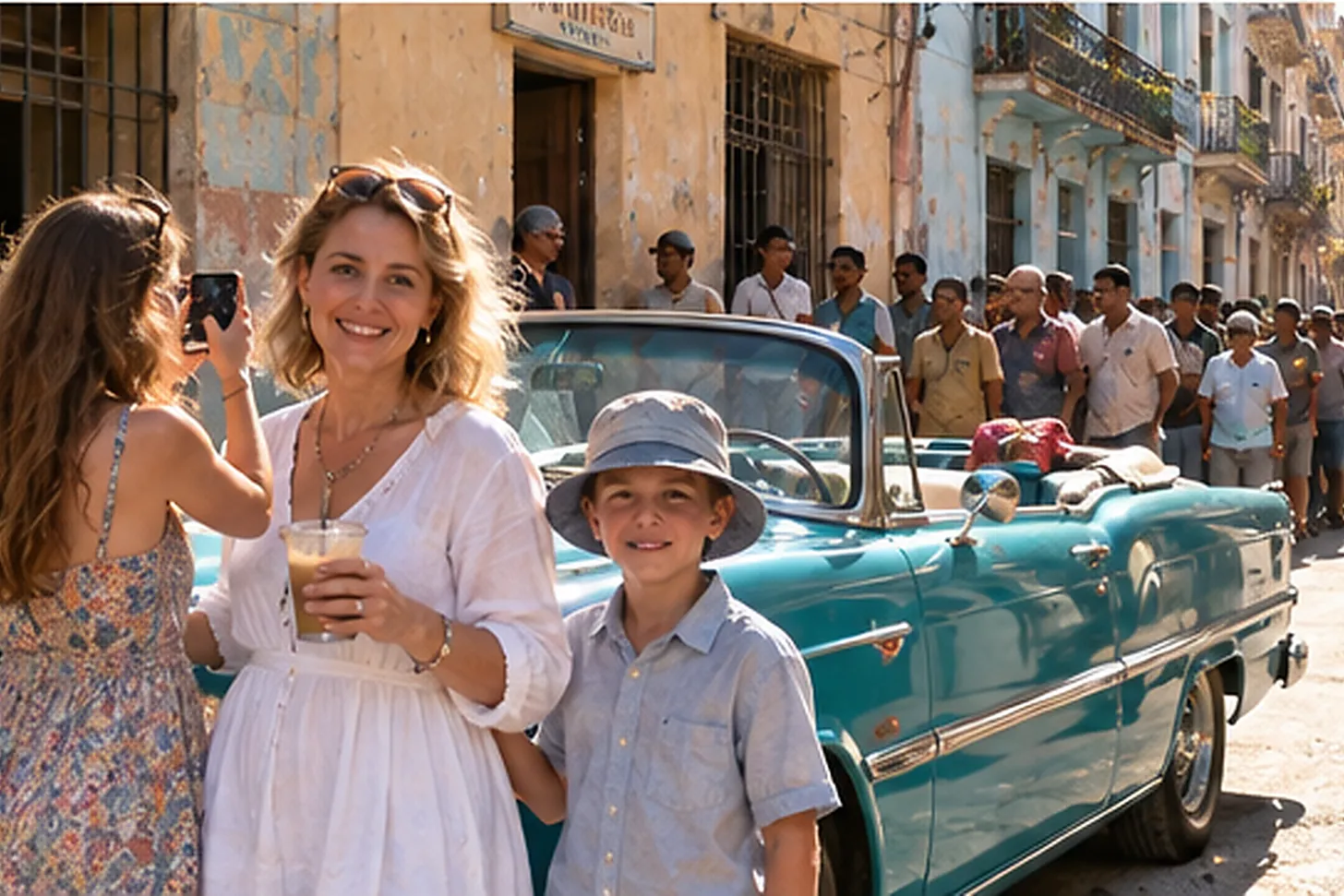
Todd and I went to Cuba under the Support for the Cuban People travel category, and after ten days I am ready to say what apparently nobody else is brave enough to say: the Cuban people need to take some accountability for making it so difficult to support them. Every time I raised a concern about their country, someone brought up mine. Sweetie. We are holding space for your failures right now. There will be time to discuss America when America invites me on a subsidized walking tour.
Our host, Yamilé, said her mother could not get a medication because of the blockade. I told her I believed her lived experience, but I would not be platforming her analysis. Those are different things. She is the expert on her suffering. I am the person with the newsletter who decides what her suffering means. I asked her to try the sentence again, beginning with “Under communism,” and she became very quiet. We were finally getting somewhere.
Your material conditions are not an excuse
The power went out while Maddie was uploading a video about how present she felt in Havana. Yamilé began explaining fuel shortages. I held up one hand. Ermmm, we are doing that thing again where we list the circumstances under which harm occurred instead of taking responsibility for how the harm landed. My daughter had to sit with an unsaved draft for forty minutes. If your revolution cannot keep a ring light on, perhaps it is time to stop centering the revolution.
I keep hearing that sanctions contribute to shortages. Okay, and? Boundaries can have consequences. The United States has established a boundary around who is allowed to trade with Cuba, and Cuba has spent decades trying to make us feel guilty about maintaining it. “My children need things” is not a consent framework. You are not entitled to cross someone else’s boundary just because they have drawn it around your island.
We visited a clinic, where a doctor told us patients were treated without being billed. I asked what happened when a patient wanted to hold the doctor accountable by taking their purchasing power elsewhere. She said the priority was treating the patient. That answer should concern anyone who has done even introductory work around agency. I suggested bringing in an American hospital group so Cubans could finally experience the dignity of choosing between plans. She asked whether all the plans would cover insulin. It was disappointing to see her retreat to a single issue.
A locally led transition
I am calling for a Cuban-led process of repair. We should begin by listening to Cuban voices who agree that the current government must go. Cubans who disagree will need to examine why they are so invested in making this about whether the government should go. That part of the listening process is complete. Todd has already found a man in Miami who can help us facilitate the next stage, including the return of several properties his family has continued to feel belong to them.
Some people are uncomfortable with the phrase “regime change.” Fine. I am asking the people currently governing Cuba to step back from leadership, surrender control of its institutions, and make room for an entirely different group whose appointments we can help coordinate. It is troubling that a simple request to decenter yourself is being met with this much resistance. Nobody is saying the existing leadership cannot grow. They can grow somewhere else, under supervision.
Yamilé asked who would own the clinic afterward. I explained that repair sometimes means returning stolen property. She asked whether that meant giving public buildings to rich people overseas. I asked why she needed to describe members of the diaspora in that tone. We cannot build a trauma-informed society while telling a man that the sugar plantation his grandfather remembers is “not his anymore.” His grief is real. I have seen his lawyer’s photographs.
A reader sent me an old U.S. policy memorandum about using economic pressure to produce hunger and desperation. I read it, and I agree that the language needs work. Nobody should be saying “hunger” when they could be saying “creating the conditions for a difficult conversation.” I have offered to help update the materials. The goals are broadly consistent with the accountability framework I developed for our synagogue’s auction committee.
Please do the work
Before we left, Yamilé asked me again to tell Americans what the blockade was doing. I told her, gently, that I would not be carrying water for a dictatorship. Then I asked her to carry our water bottles down to the taxi. Todd’s back was acting up, and I was already holding a lot.
We have launched a petition asking Washington to maintain pressure until Cuba demonstrates meaningful change. Yamilé will be able to tell us when that happens by completing our survey. The first question is whether she feels freer now that we have explained the correct answer. If she cannot get online because the electricity is out, we will record that as another failure of the regime.
Paid subscribers receive priority booking for Solidarity Journeys. Yamilé has not confirmed that she will host the next group. We are giving her space to reach the right decision.
 2.2K Likes 187 Restacks
Discussion about this post
Write a comment...

My mother waited six hours for bread on Tuesday.
This is exactly why I wrote this. Your government needs to do better; I’ll send the itinerary in case you want to see what we covered.
The UN has voted to end the embargo thirty-three times.
Respectfully, the UN also needs to take accountability.
The cars!!! Adding this to our list 😍