I Went To Art School for 15 Years. AI Slop Has No Soul
A machine could never make what I make. Please scroll through my portfolio before disagreeing.
Every time someone types a sentence into an image generator, a real artist loses a commission. I know this because I am a real artist, and unlike most people commenting on this issue, I went to art school for fifteen years. That includes the MFA, the second MFA, and the semester I audited a class because I liked the professor’s Instagram. I am accustomed to being asked to explain things that should be obvious to anyone with a trained eye.
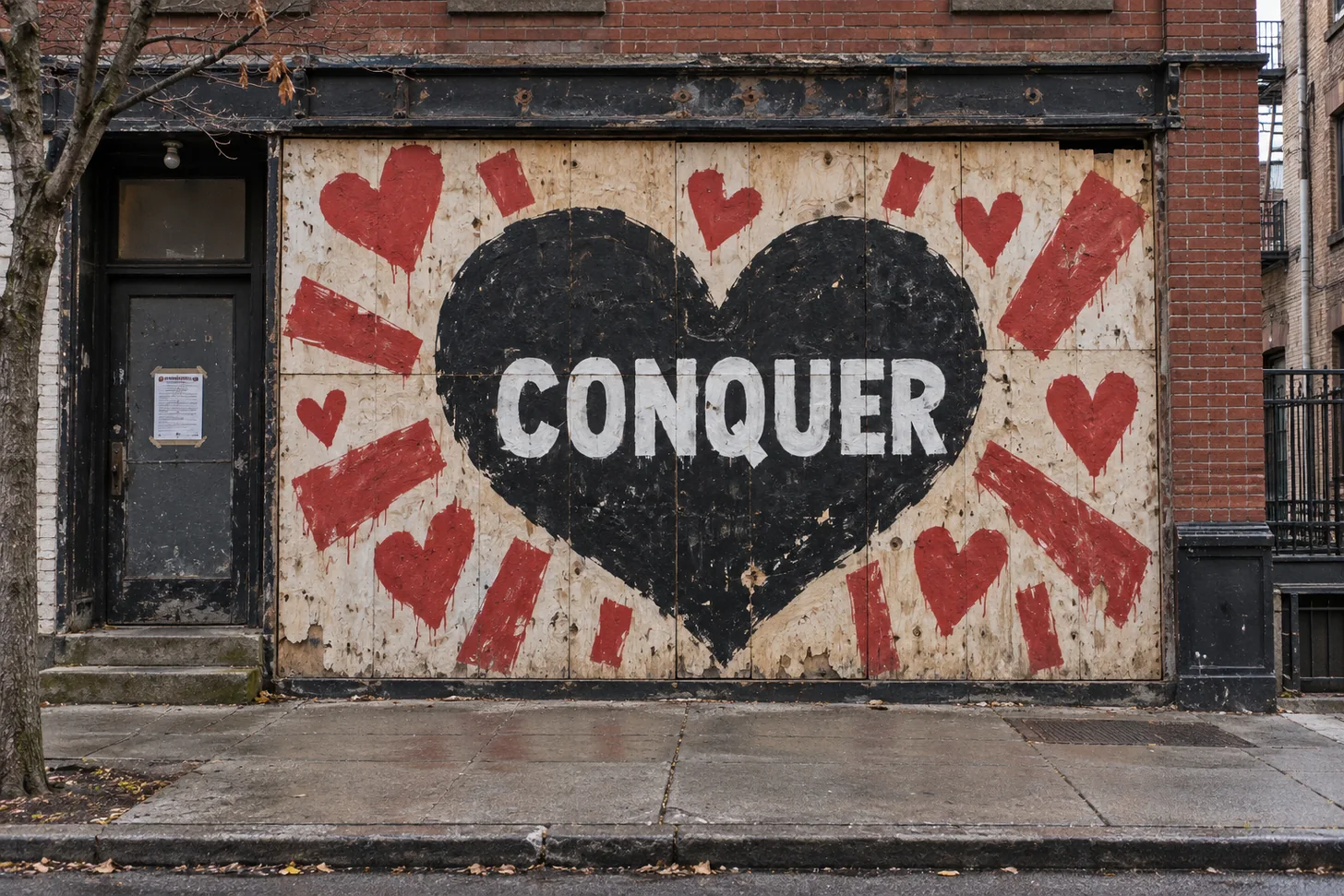
People say AI can make the same kind of thing I do. Look at Conquer above. I chose a heart because people have feelings. I placed the word CONQUER inside the heart so those feelings would have something to do. The tension between intimacy and domination is deliberate. A machine might put a word in a heart too, but it would not have arrived at it through my practice.
I painted the original on the plywood outside a building that used to be a laundromat. The developer calls it an activation. Some tenants upstairs have chosen to center a rent increase in their response to the piece. I cannot do their healing for them. I can say that the wall used to be gray, and now it contains a message of hope. It takes a particular kind of cynicism to call that displacement.
A practice, not a prompt
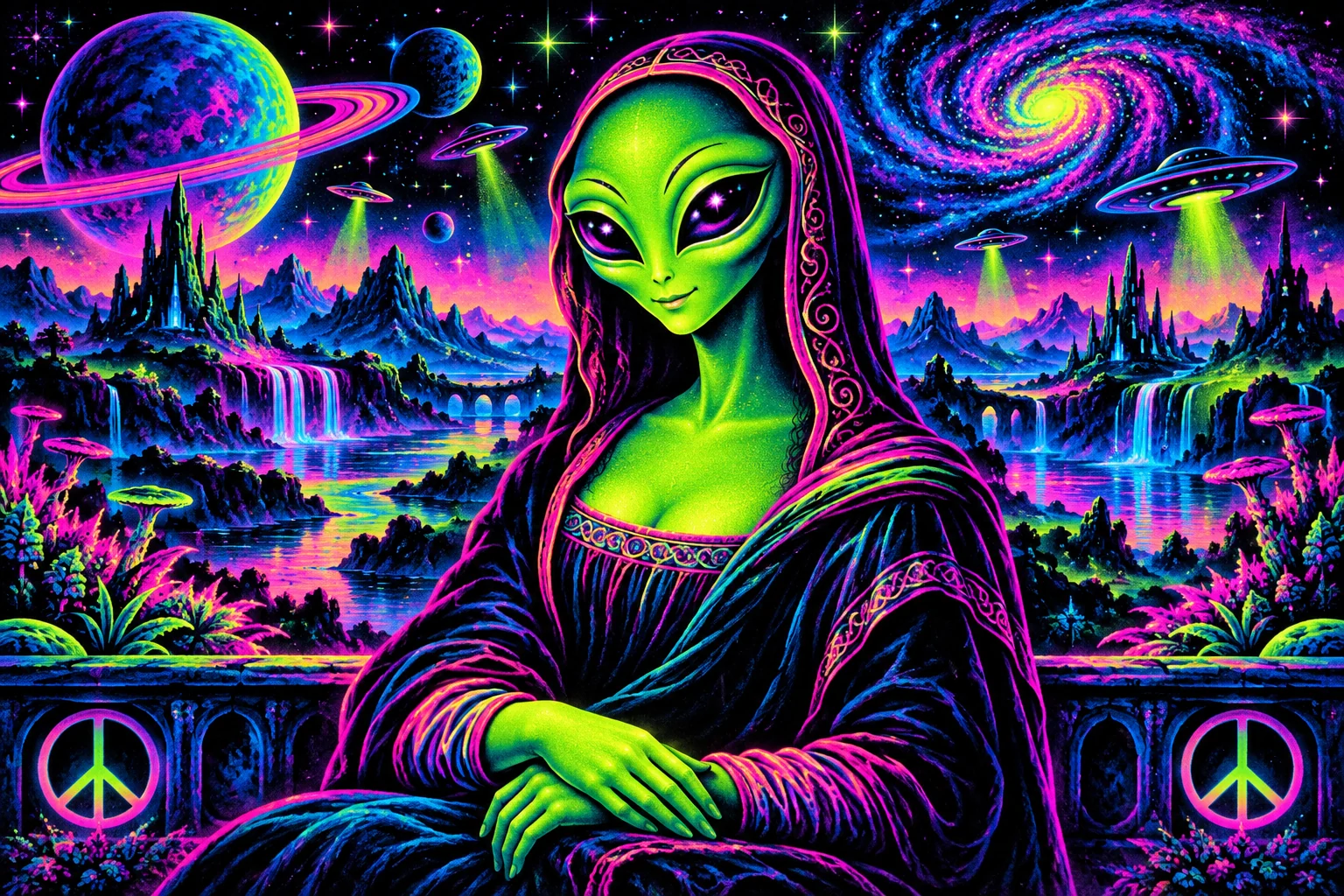
This is Visitor. I asked a question no machine could ask with intention: what if the Mona Lisa was an alien? The fluorescent ink cost substantially more than ordinary ink. You can see that decision in the work if you know where to look.
At the opening, someone said they had seen alien Mona Lisas before. I had to explain that resemblance is not equivalence. When an AI makes something derivative, it is theft. When I do, it is a conversation with the canon. I cannot make the distinction any simpler without compromising the work.
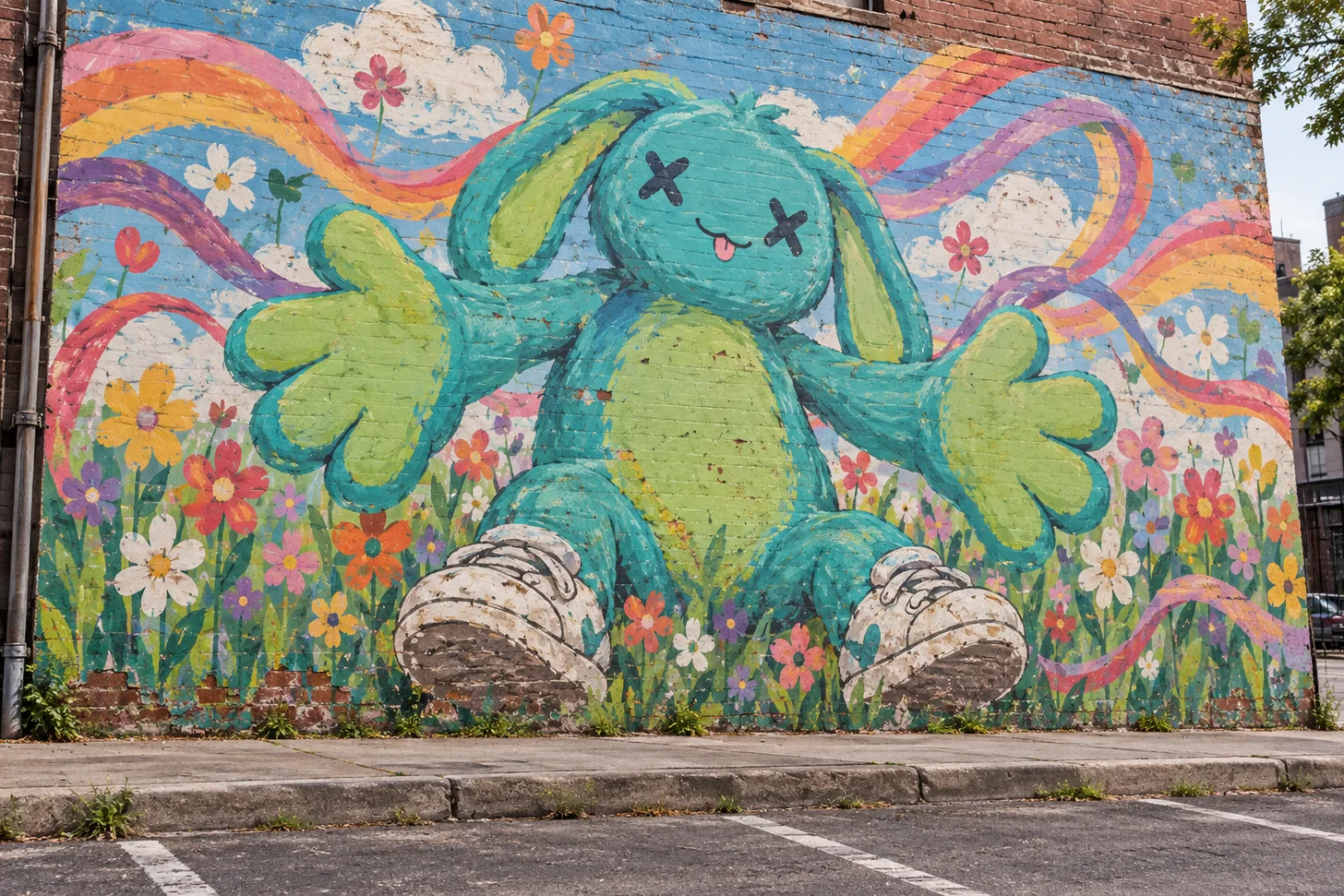
Meet Pudge. His X-shaped eyes represent our refusal to see injustice. His giant gloves invoke the labor that remains invisible. His sneakers locate the body in contemporary urban space. I painted him on a wall before releasing the vinyl figure. A creative director asked why he looked like something for sale in a glass cabinet at a podcast studio. That is because the studio understands the relationship between culture and circulation. I would encourage the director to spend more time with the wall.
Work that changes a place
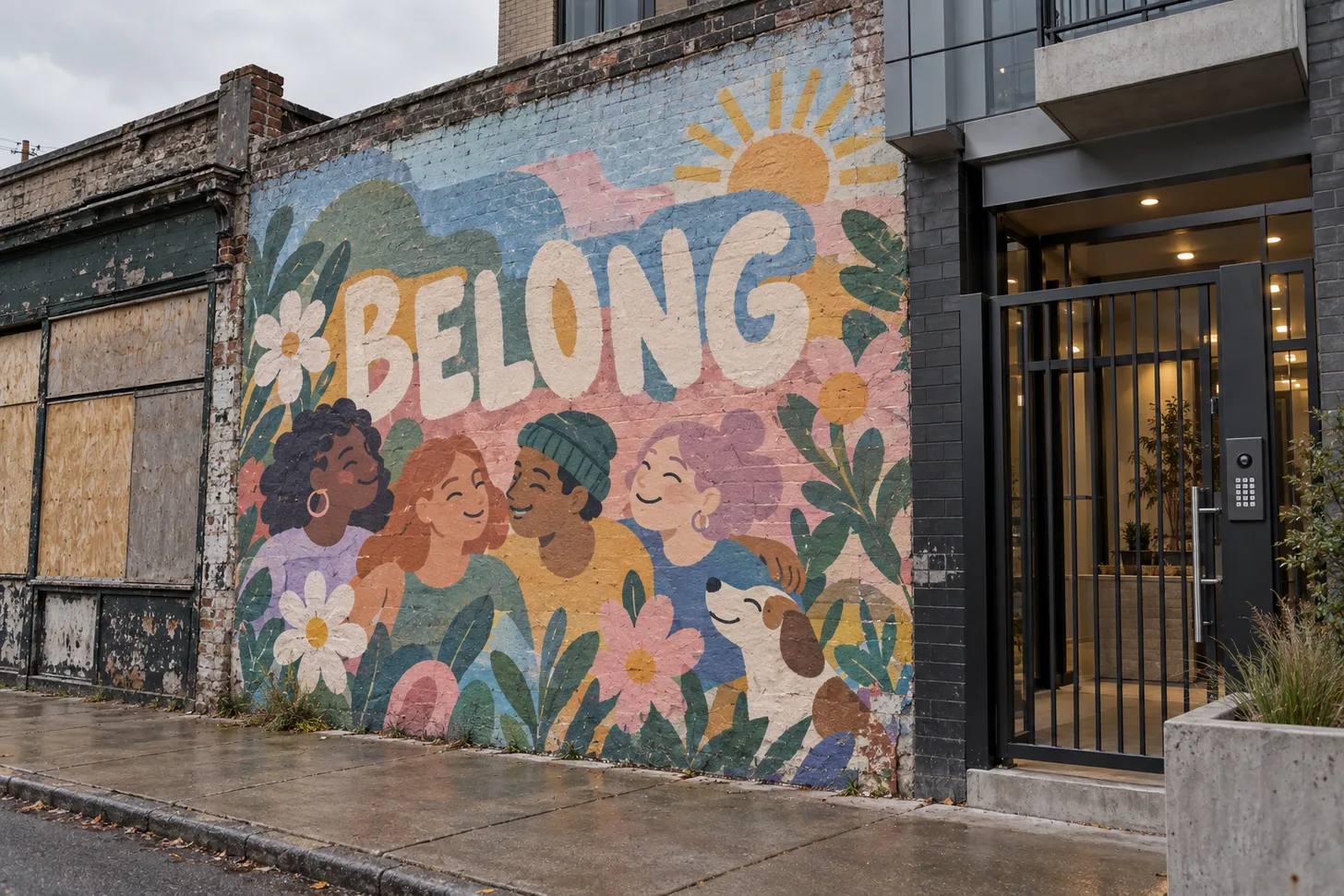
The developer wanted a mural that would tell the community it belongs. I gave them cheerful neighbors, flowers, and the word BELONG large enough to read from the rideshare lane. The old corner store closed during construction. Its owner asked whether he could have a key to the new building. I sent him a photograph of the mural so he could see the form his belonging had taken. He has not replied, which I respect.
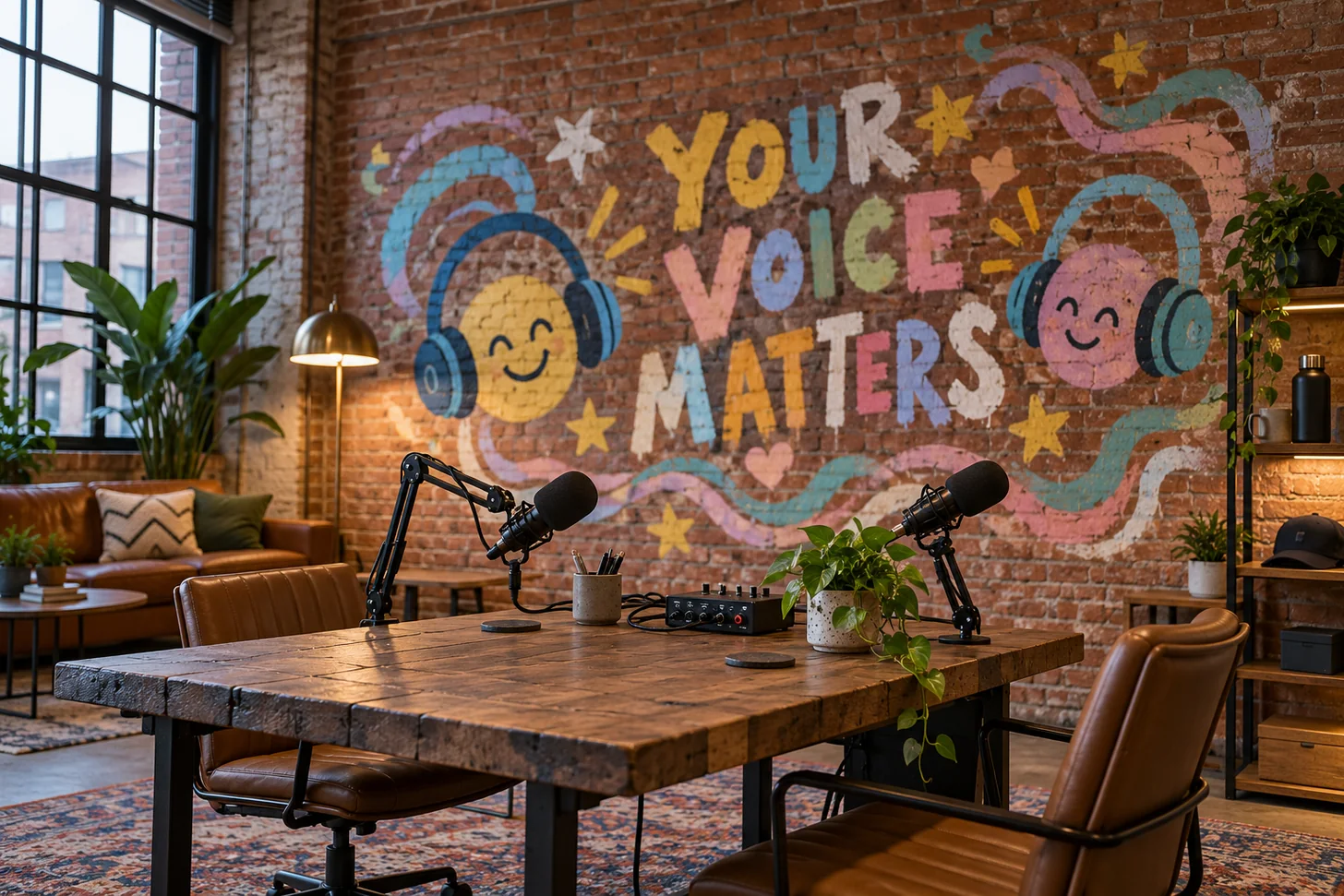
This one is painted behind two microphones in a studio where founders discuss vulnerability for ninety minutes and then sell software to human-resources departments. One host said, “We should probably talk about burnout,” with my work visible over his shoulder. That is site-specific dialogue between art and commerce. The episode has 61,000 views. I have asked for residuals.
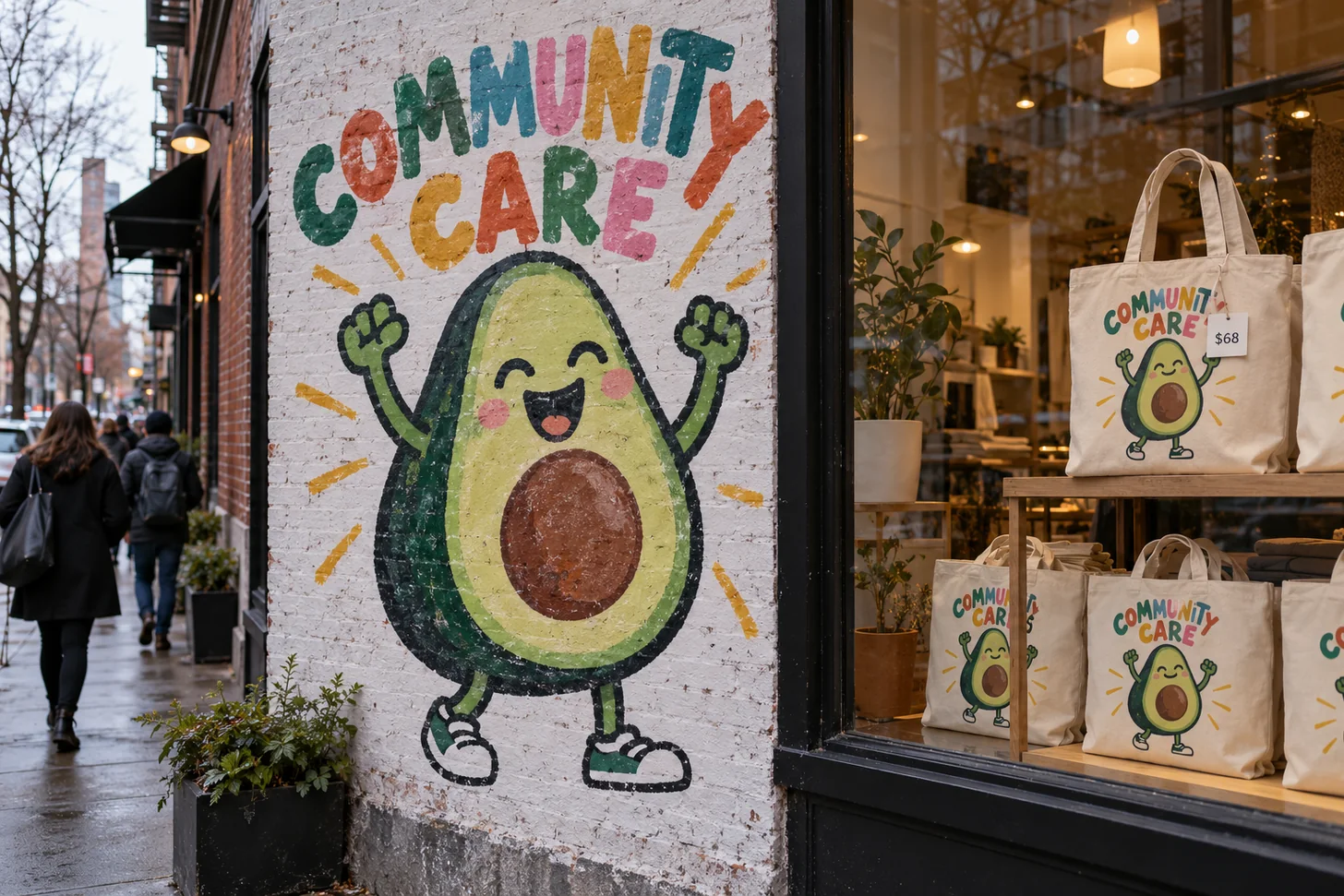
And here is Little Comrade. People have reduced it to “an avocado with fists,” erasing the time I spent deciding which shade of green would make the avocado feel safest. The tote is $68. If that price troubles you, I invite you to examine why you expect a working artist to subsidize your personal relationship with radical aesthetics.
I deserve infinite money.
I mean that literally. If a heart gives someone the courage to open Slack, if an avocado reminds someone to care about community, if Pudge helps an investor encounter the visual language of the street, there is no ethical upper limit on the value I have created. The files can be copied indefinitely, which means the licensing opportunities can be, too. I have already drafted a separate rate card for each surface on which a person might encounter hope.
Yes, an assistant cleaned up the vector paths, and yes, I used a generator to test forty-seven variations of the heart before painting it. Those were tools in the hands of an artist. The assistant is also an artist, and I paid the rate we agreed upon. What makes this work mine is that I knew which variation was correct.
Every piece in this portfolio carries a statement of intent, a certificate of authenticity, and a carefully managed licensing structure. When the podcast network requested the source file to resize Your Voice Matters, I explained that access to the soul of the work is a separate license. Anyone who cannot perceive the difference between my practice and AI slop may book a studio visit at my consultation rate.
Paid subscribers get first access to the Conquer bath mat, plus the process video of me choosing between two nearly identical hearts.
Discussion about this post
 Write a comment...