

My Nanny’s Attachment to Her Own Children Is Reproducing the Nuclear Family
Care, kinship, and the work of moving beyond biology.
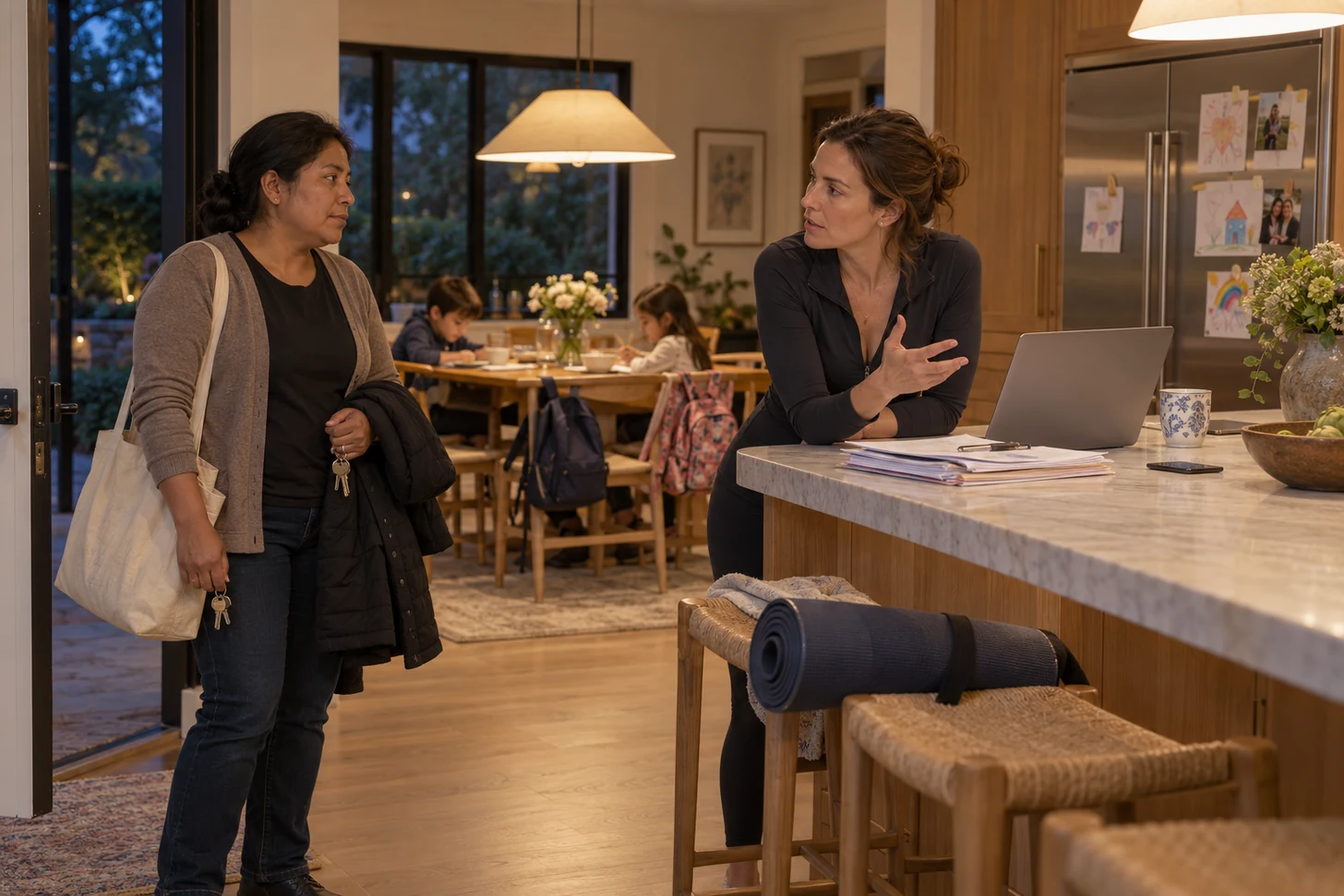
In The Origin of the Family, Private Property and the State, Engels locates the family within the history of property and inheritance, exposing the material arrangements beneath what we are taught to experience as natural affection. I have been thinking about this since my nanny, Marisol, told me she could no longer stay past six because she wanted to have dinner with her own children. Marisol is from Guatemala, and I respect the experiences she brings to our home. I also believe that solidarity requires us to challenge one another when those experiences become the basis for reproducing the very structures we claim to oppose.
Six is a particularly difficult time for her to withdraw from our care collective. Breighlyn is transitioning out of screens, Tannyr needs someone to sit beside him while he rejects dinner, and I am often still managing the six rental units my parents left me or attending the Pilates class that allows me to remain regulated through bedtime. The assumption that I can simply absorb this work because I am their mother is precisely the kind of gendered biological essentialism that generations of feminists have struggled to dismantle. Hearing it effectively restated by another woman, in my own kitchen, was painful.
Marisol explained that her younger child had been asking why she was always home after he went to bed. I held space for that, while gently asking what made his need for her presence categorically different from Tannyr’s. Both children need care; both children have formed attachments to her; only one of those attachments is being privileged by an appeal to blood. A politics capable of moving beyond the nuclear family has to interrogate the moment when “my child” becomes an argument for abandoning somebody else’s.
Sophie Lewis’s work asks us to imagine care proliferating beyond the private household, and I have tried to put that invitation into practice. Marisol has a key, appears in several of our holiday photographs, and is welcome to eat whatever the children leave from their prepared meals. When she described staying late as “overtime,” I felt the limits of a purely contractual vocabulary for a relationship into which I have put so much emotional openness. We cannot build new forms of kinship while insisting that every additional hour spent with a child must pass through the wage relation.
I am familiar with Silvia Federici, and I take the feminist critique of unwaged reproductive labor seriously. It informs my insistence that my own work coordinating school calendars, approving repairs, and remembering everyone’s dietary preferences be recognized as work. But recognition is a relational practice, and it cannot flow in only one direction. When Marisol leaves at six, the labor does not disappear; it falls onto a woman who has already spent the afternoon explaining to a tenant why emotional distress does not suspend a rent increase.
To her credit, Marisol proposed bringing her children here in the evenings. I was open to exploring that, although Breighlyn’s occupational therapist has emphasized consistency, and Tannyr is going through a period in which other children touching his possessions can feel deeply destabilizing. There are also differences in food, routines, and language that would require substantial work from me to navigate ethically. I told her I did not want to bring her children into a space before I could guarantee that their presence would serve everyone’s growth, and suggested we revisit the idea after Breighlyn’s birthday season.
The property question has also surfaced in these conversations. A friend asked how I reconcile family abolition with holding the apartments in trust for my children, and I appreciated the opportunity to distinguish between an emancipatory horizon and the immediate duty to keep vulnerable people materially secure. Breighlyn and Tannyr will inherit assets because they are growing up in capitalism, and withholding those assets would do nothing to abolish it. Marisol’s evening availability, by contrast, is something we can actually change through an intentional practice in the present.
I have given her a copy of Lewis and invited her to use the children’s nap time to read it, once the laundry is finished. Next week I would like us to sit down together and develop a care agreement grounded in our shared commitments rather than inherited assumptions about whose children belong to whom. I will need her here until eight for that conversation, so I have asked her to make arrangements for her family.
 512 Likes 81 Restacks
Discussion about this post
Write a comment...
I also work as a nanny. Staying until eight means paying someone else to collect my daughter and feed her. The family I work for calls me part of the family, but the woman who looks after my daughter expects to be paid every evening.
This is why the transformation has to happen across households. Adding another transaction at each point in the care network leaves its underlying logic intact. I hope you can have that conversation with her.
Lewis’s argument allows more people to sustain relationships of care. Marisol offered to bring her children, and you declined. You have expanded her obligations to your household while keeping access to the household itself restricted.
I recognize this from our own care arrangement. Our sitter said she needed Tuesdays for a course, although Tuesday is when my writing group meets. We are still discussing why one form of personal development was presented as automatically taking precedence.
I rent one of the upstairs units. You asked me to use the tenant portal when I said the heat was out, and the portal has not had a reply since Monday. Is that also part of the care collective?
Please keep maintenance requests in the designated channel so they can be documented and addressed consistently. Moving them into a discussion of reproductive labor creates additional administrative work for the woman you are asking to respond.
I can stay until eight on Thursday if those two hours are paid. I need to confirm the person who will collect my children before Wednesday. The book is on the shelf by the washing machine.